Canon, Nikon, Panasonic, and Sony have now all introduced their sub-US$3000 model updates that bring a key older model into their current generation designs (e.g. Canon R6 Mark III, Nikon Z6III, Panasonic S1II, and today Sony A7 Mark V).
One interesting thing to this story is that Sony dropped a major firmware update for the A7 Mark IV (and A7R Mark V) just prior to showing the new camera. By major, I mean additions and changes to the focus system, new video workflow, improvements to FTP transfers, vertical information overlays, a Golden Ratio grid, new button customizations, image authentication, as well as the usual bug fixes and stability improvements.
To me, this says that Sony is going to keep selling the Mark IV alongside the Mark V for awhile. But it also means that to get significant new upgrade/update sales from their users, the Mark V needs some distinguishing traits of its own, so let's get to that...
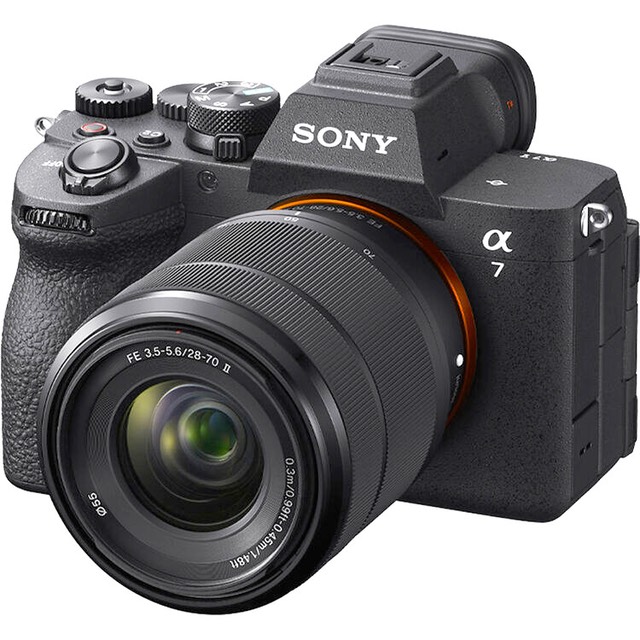
Let's start with what a Sony A7 Mark V is and isn't. At first glance, many things appear the same as the four-year old Mark IV: 33mp image sensor, 4K/60P no crop, and a body design that looks mostly the same. However, that image sensor has been updated to partially stacked, which changes a number of key features relating to bandwidth. We now have 30 fps 14-bit raw as well as pre-capture on the still side. On the video side we now have 4K/120P (1.5x cropped), and a better 4K/60P (but we don't get 6K, Open Gate, or raw video). The IBIS platform on which the sensor sits now provides up to 7.5 stops of stabilization (up from 5.5). The BIONZ side of things now gets an AI addition, much like the top end Sony cameras.
Some of the physical bits remain the same. We still have dual card slots with one being CFexpress Type A or SD, and the other being just SD. We still have the 3.69m dot EVF. But some items have been upgraded: the Rear LCD gets a tilt mechanism to go with its articulation, the Mark V now has two USB-C ports to facilitate data delivery while powering the camera simultaneously, there's Bluetooth 5.3 and a full Wi-Fi 6 implementation.
The first question that gets asked is "should I upgrade from my Sony Mark IV model?" Generally, I've long held that if you're sticking with a particular model in a brand lineup, you should skip updates (e.g. update from version 1 to version 3, but not 2). In this current round of mid-level mirrorless bodies, there's been some pretty big moves, though, so I wouldn't fault you if you saw the increased performance as being worth getting out your credit card again. One thing that should be considered though is that you probably won't really get better image quality (though if the focus and IS systems work better for you, you might get better images, just not really better pixel quality). You'd be buying for features and specific performance benefits.
So let's talk about the current entrants in this category. The Nikon Z6III is now the oldest at just a bit over a year old. Panasonic's S1II is only six months old, Canon's R6 Mark III is barely a month old, and now Sony has the newest camera in the group. On thing that's happened in this round of updates is that we're now a long ways from the old US$2000 prices that earlier versions of these cameras were selling at. The Nikon lists for US$2500, and the new Sony is US$2900. The Panasonic is actually the priciest at list price at US$3200.
The first thing you're probably asking is whether 24mp (Nikon, Panasonic) is now outdated. No. 33mp really only gives you about a 3" bigger print size overall (e.g. 23" instead of 20"). Almost no one can distinguish that minimal increase in resolution. In terms of dynamic range, the Panasonic is best at ISO 100 due to the unique way in which it manages the dual gain system, but that's still only perhaps a stop better than the worst player at ISO 100, and that advantage disappears as you boost ISO. I will say that the electronic shutter on the Canon shows clear noise degradation that the others don't (though I haven't tested the Sony on that yet). Still, all the image quality parameters basically work out to be similar enough not to be a consideration in which model to buy.
Yes, on the video side there are some differences in how things are handled if you need more than 4K/60P using H.265 (10-bit 4:2:2). But how many of you are buying this level of camera to do top-end video (and Nikon's lower cost ZR suddenly makes a case for considering it instead, as it does clearly better 6K raw video than I've seen from anyone else at anywhere less than double the prices we're talking about).
It doesn't even fall to unique features any more. Everyone does pre-capture now. All buffers are now adequate. The EVFs are excellent (though Canon's still lags a bit). Perhaps you can find some differences in pixel shift, focus shift, or multiple image capabilities, but those are pretty esoteric features not used by all that many.
Which brings us to where we were in the DSLR era: stick with the brand you know. The way the naming, UI, and physical controls work is unique to each brand. As I've written for years: you will miss photos if you're still working through the cognitive dissonances of changing brands. Chasing marginal gains by switching brands as you update/upgrade tends to be counterproductive.
So for Sony users at least, we're back to the question that came up earlier: "should you upgrade from the Mark IV model?" If you're a casual photographer who doesn't press their camera to the max, the answer is a fairly clear no. You've got a really competent camera already. If you're really pressing the focus system or the continuous frame rate, okay, it's worth taking a look at the new Mark V. But I'm not seeing a lot in between that would justify the expense of moving to the new model, particularly since the used value of the Mark IV has been plummeting.
Finally, there's this: why introduce a new camera on December 2nd? Dealers loaded up their holiday inventory (and committed their cash) prior to November's early Black Friday promotions. Multiple dealers I talked to didn't even know when the Mark V was going to be announced until the first teaser dropped on November 26th. Trying to squeeze in a limited shipment before the end of the year is either (1) "we're late and we needed those sales to meet quarterly numbers"; or (2) "oh no, Canon dropped the R6 Mark III for the holidays and all we have is a four-year old camera." Perhaps both. Waiting until CES on January 6th would have been a way to make a bigger, more visible launch, and out of all the holiday sales noise.
